Albert Gast: "Good design ensures that research has more impact"
What is it like to be a female entrepreneur in Amsterdam-Noord? Commissioned by the Noord district, A Lab member Albert Gast of Think+Do investigated the experiences of female entrepreneurs, the obstacles they face, and the role that networks and the district can play in their development. For the study, he spoke with seventeen entrepreneurs from diverse sectors. Together with fellow A Labbers Wytze Veenstra and Annelies Vlasblom, he translated the results into an accessible and visual report. We spoke with Albert about the research, the encounters that stayed with him, and the power of collaborating within A Lab.
Can you tell us more about the assignment?
‘The project started about a year ago. Through Arpád, the question arose as to who would like to conduct the research. I then began investigating in the Noord district what female entrepreneurs run up against, what networks already exist, and how those networks can be better leveraged to their advantage.
In total, I interviewed seventeen female entrepreneurs. In doing so, I wanted to make different forms of entrepreneurship visible and ensure a broad, multicultural representation. That was quite a challenge at the beginning.
I spoke with women who can serve as role models for vocational students, such as the director of a law firm. Based on the conversations, we developed various entrepreneur profiles. In the report, we also described what female entrepreneurs expect from the Noord district, how the district can help them build a network, and what role the entrepreneurs themselves can play in that.’
What topics emerged during the research?
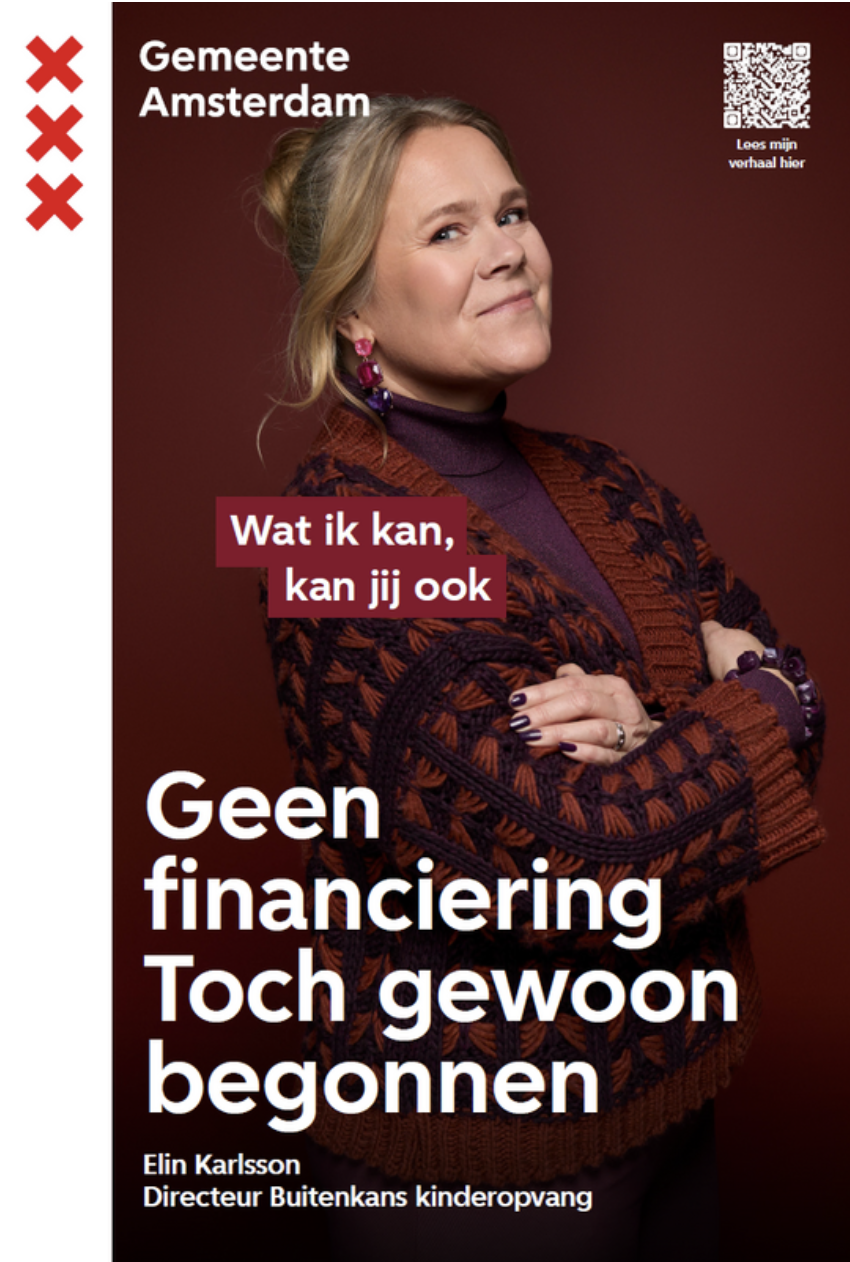
‘A number of major themes kept recurring. Female entrepreneurs have more difficulty accessing credit or loans and are less likely to be taken seriously. For example, an entrepreneur who wanted to apply for financing for her daycare center was asked by the bank: “Does your husband have a good job?” That shows that there are still assumptions about who is seen as a credible entrepreneur.
Furthermore, some women became entrepreneurs out of necessity. For instance, one of the interviewees did not have the network after her law studies that others could fall back on through their study associations or family. Entrepreneurship became a way for her to create opportunities for herself.
The research shows that there is still much to be gained. Female entrepreneurs are resilient, collaborate frequently, and often make a social contribution with their businesses. At the same time, they face structural opposition. The Noord district can also do more to make networks, knowledge, and support more accessible.’
The results of the research prompted the Noord district to develop a campaign together with Calamity Jane. In it, female entrepreneurs were highlighted as role models, and quotes and experiences from the research were featured.