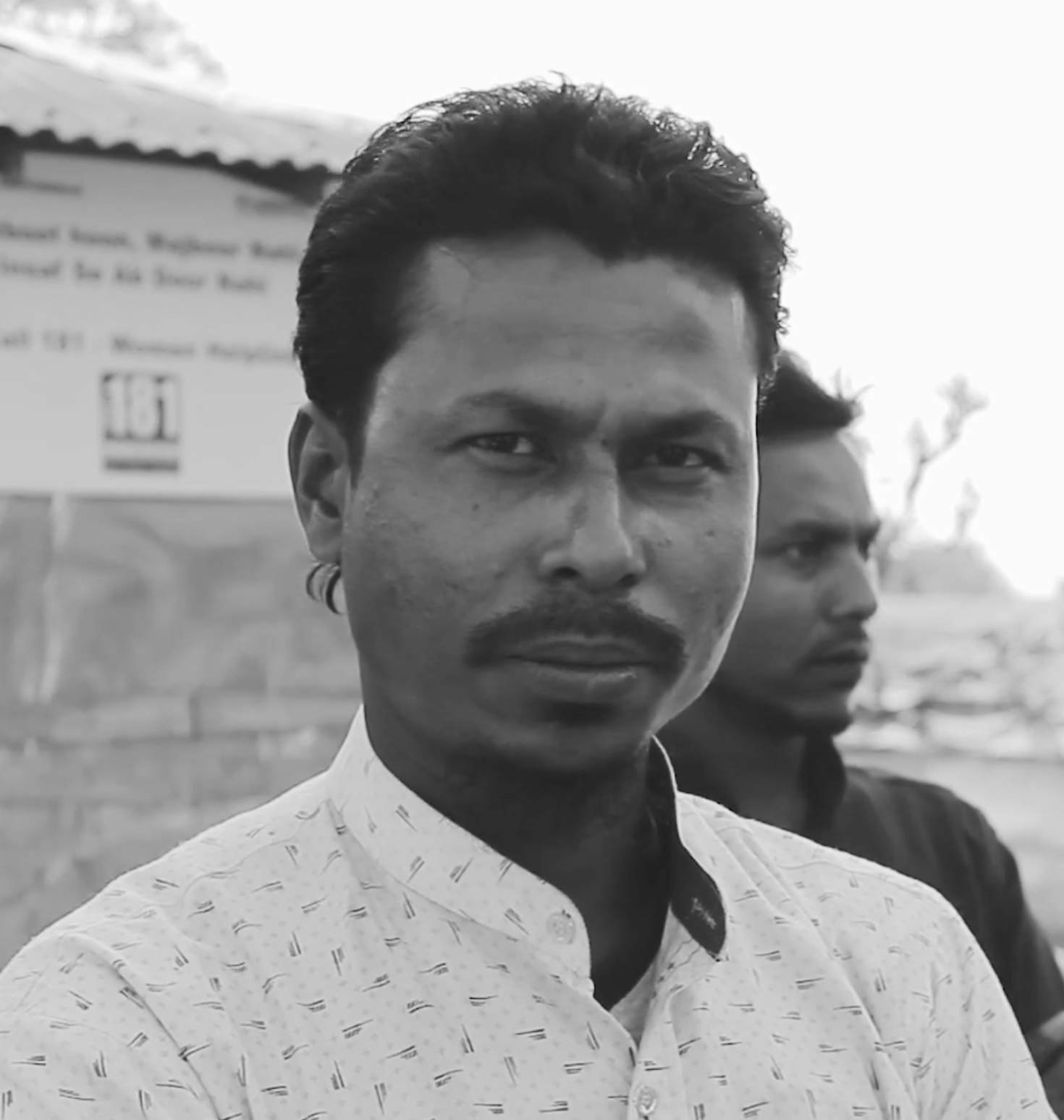
Documentary filmmaker Syed Jazib Ali of Mudland on stories that cross borders, working between Kashmir and Europe and the importance of a creative space centred around connection.
Syed Jazib Ali: ‘I was looking for a table and a chair, but found a community’
Syed Jazib Ali is a documentary filmmaker, media professional and founder of Mudland Studio. His practice operates at the intersection of storytelling, culture and social and ecological justice. Working across film, journalism and creative strategy, he collaborates with artists, researchers, activists and social organisations on stories that require depth, care and responsibility.
Much of his work is shaped by where he comes from. Jazib grew up in Kashmir, in the Himalayas, a region where political, social and ecological issues are deeply intertwined. His projects often emerge from long-term relationships with frontline and Indigenous communities, while being developed and produced through an international network across Europe.
Jazib recently started working from A Lab. What began as a search for a permanent workspace outside his home quickly turned into something more. At A Lab, he found not only a desk, but a creative environment built around curiosity, exchange and connection.
During Open Labs, Mudland presented the film installation Borders, Belonging & Freedom. Three short documentaries on displacement, citizenship, protest and justice explored how individuals and communities in contemporary South Asia navigate identity, belonging and democratic participation.
Jazib is currently working on a documentary, an immersive VR project and several collaborations around climate, culture and media. We spoke with him about his practice, his first impression of A Lab and why he believes a creative community should also make space for moments in which nothing needs to be produced.
You work across film, journalism and creative strategy. What connects these different parts of your practice?
‘For me, it always starts with stories and with the responsibility involved in telling them. My work moves between culture, social justice and ecological issues. Sometimes that results in a documentary, sometimes in journalism, a campaign or a creative strategy. The form changes, but the core remains similar.
Much of what I do grows out of long-term relationships with communities and people. I am originally from Kashmir and that background has a strong influence on the way I think about stories, power, identity and belonging. At the same time, I now work extensively from Europe. Mudland therefore exists between different places, perspectives and contexts.’
What was your first impression of A Lab?
‘My first impression was that it is a very special and creative place. A Lab has a soul. It felt different from other workspaces I had seen. From the beginning, I experienced it more as a community than as an office building.
I noticed that things were happening everywhere in the building. People were gathering in different spaces, there was music and there were events. I attended an interesting virtual reality event, for example. The energy felt warm and open.
I was actually only looking for a table and a chair outside my home, but I found much more than I ever expected: a community and a place where I can continue to develop. A Lab is increasingly starting to feel like home.’
Why was it important for you to find a permanent creative base?
‘My partner Maria found A Lab. She had contacted several places because I was working from home a lot and noticed that I needed more structure. She encouraged me to find a workspace outside the house.
Of all the places we looked at, A Lab was our favourite. I travel a lot for work, so having a permanent base is very valuable. It is somewhere I can return to, continue working and at the same time be surrounded by other makers.
Especially because many of my projects develop internationally, having a physical place also creates continuity. You need a base from which ideas can continue to grow.’
During Open Labs, you presented Borders, Belonging & Freedom with Mudland. How does that project connect to your wider practice?
‘Themes such as belonging, identity, citizenship and freedom regularly return in my work. In Borders, Belonging & Freedom, we brought together three stories that each show, in their own way, how political circumstances affect individual lives and communities.
What interests me is not only what happens, but also how people respond to it. How do people find space to define themselves? How does belonging emerge when borders, systems or political structures make that complicated? Those kinds of questions are very close to the core of my practice.’
You are currently working on several new projects. What are you focusing on at the moment?
‘At the moment, I am working on a documentary, an immersive VR project and several collaborations around climate, culture and media. Mudland also works with organisations on stories, campaigns and creative strategies.
For me, it is interesting to explore which form a particular story needs. Not every subject has to become a film. Sometimes an interactive experience works better, sometimes journalism or a collaboration with artists and researchers. Particularly with complex social or ecological issues, I think it is important not to start from a fixed format.’
Do you see opportunities for new collaborations within A Lab?
‘Definitely. One of the things I find interesting about A Lab is the number of different disciplines that come together here. You are surrounded by people with knowledge and experiences that may be very different from your own.
I am always open to exchanging ideas, having a coffee or simply listening to what someone else is working on. Not every encounter has to immediately result in a project. Sometimes a collaboration simply begins with being curious about each other’s work. I am looking forward to being part of the A Lab ecosystem.’
If you had to describe A Lab as a feeling, sound or image, what would it be?
‘The first feeling that comes to mind is belonging: the feeling of being part of something.
As an image, I think of its location by the water. A Lab is situated in a special place, surrounded by water and close to the IJ. It creates a sense of space and freedom.
I also feel a certain pride when I tell people that I work here. It is not a corporate environment. It is a place where you are inspired by the people around you and by everything that is happening throughout the building.’
Which words best describe the culture of A Lab for you?
‘Warmth, community and music.
Warmth is in the way people meet and interact with each other. Community is about the feeling that everyone here is working on their own things, while still being part of something larger.
And music is really part of A Lab for me. Almost every time I am here, I hear music somewhere in the building. It is always something different. That gives the place a lot of energy and character.’
What would you like to see at A Lab in the coming year?
‘I would love to see a genuine communal space where people can relax, move and connect with one another. Somewhere you can stretch or do yoga, but also simply sit when you need a moment to breathe.
At a philanthropy conference in Ghent, I saw how little you actually need to create that kind of space. There were a few mats, calm music, some cushions and a rug. It was a simple place where people could breathe, talk, listen and slow down.
Within a creative community, health and wellbeing are very important. We all work hard and spend a lot of time focused on ideas and projects. That is why it would be valuable to also have a space where nothing needs to be produced. Somewhere you are simply allowed to be.’
Curious about the work of Syed Jazib Ali and Mudland Studio? Explore their films, projects and collaborations on the Mudland website. And if you run into Jazib at A Lab, he is always open to a conversation, a coffee or an exchange of ideas.